
Do you know that feeling—those small, completely unexpected flashes of memory that a totally banal situation can trigger? For me, for example: when I accidentally get water up my nose while washing my hair in the shower, it’s unpleasant—but at the same time, I’m instantly back at the outdoor pool in my mind. Sun, fries with ketchup and mayo, and the unmistakably nutty scent of Tiroler Nussöl in the flat red bottle—the only thing missing is a wonderfully ice-cold Frucade. Why? Because as a kid, the only time I ever got water up my nose was when I did a cannonball into the pool. The brain is a strange thing indeed.
And then there’s my very personal ‘spring flash.’ In Germany, it’s triggered when the birds start chirping in March and the first sounds of motorcycles and scooters echo through the streets—because the seasonal license plates are valid again. I’ve known this feeling for decades: spring is on its way, the world is waking up.
And now, here in New Zealand? The birds chirp all year round—they simply have no reason to fly away in the mild Christchurch winter. Where would they go anyway—it’s just ocean all around. And where we live on Dyers Pass Road, one of the most popular motorcycle routes in the region, you hear the bikes humming up the hill whenever the weather is nice—which is most of the time. The result: my brain steadfastly takes the New Zealand winter for spring 😊
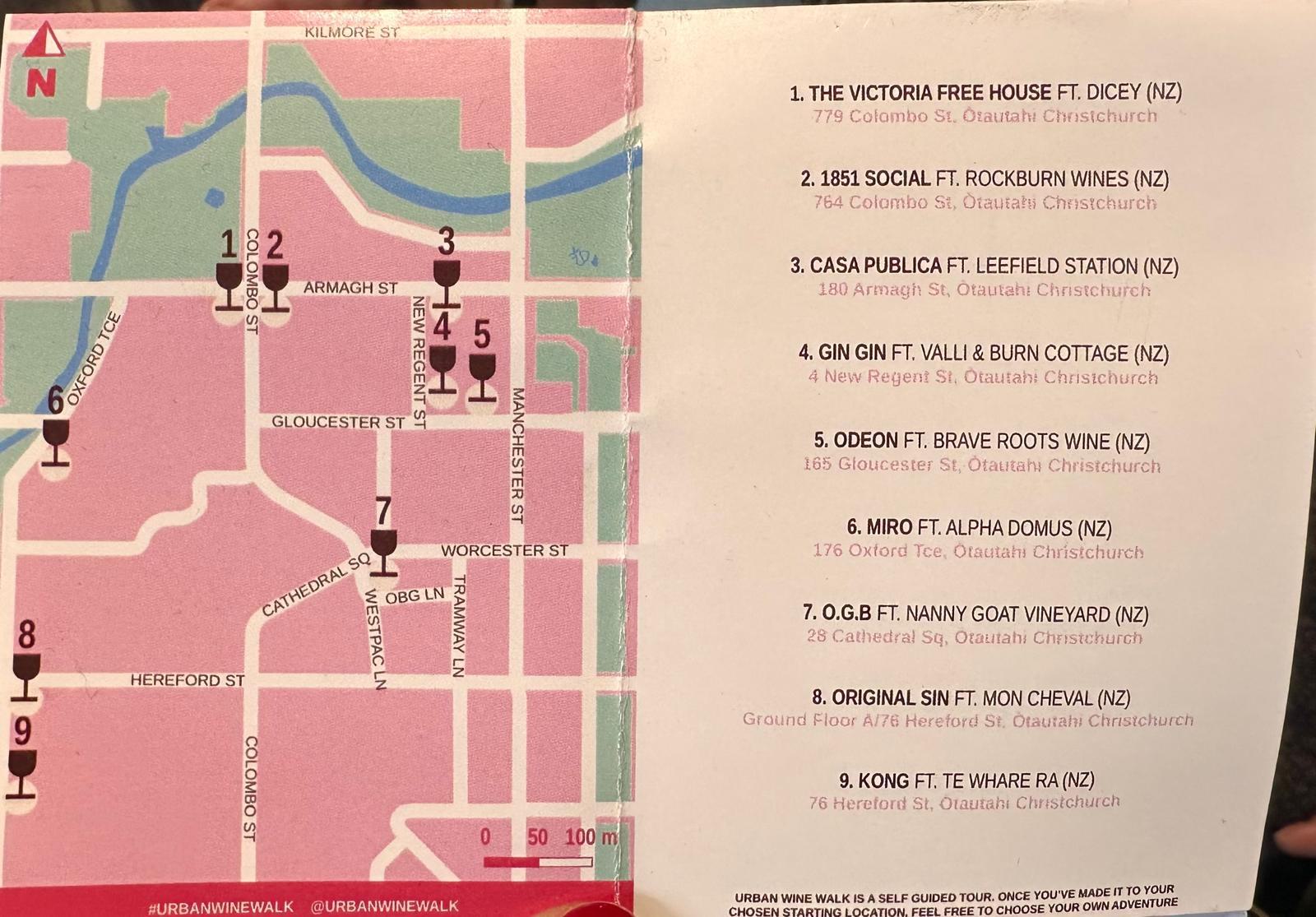
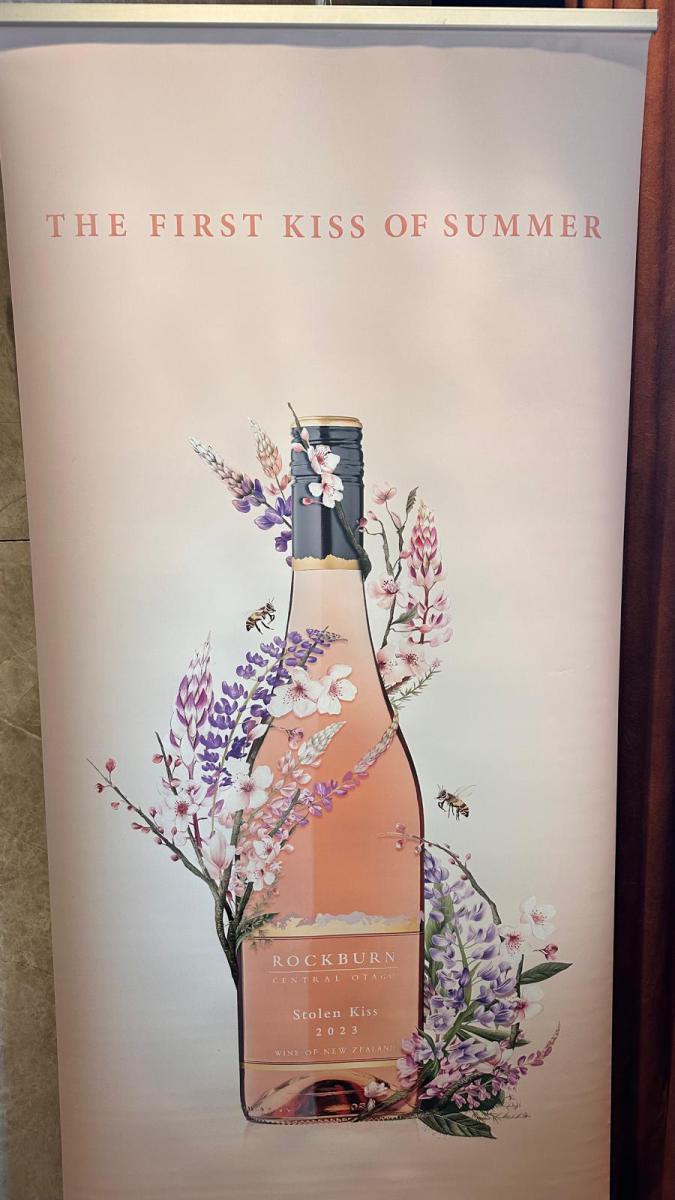
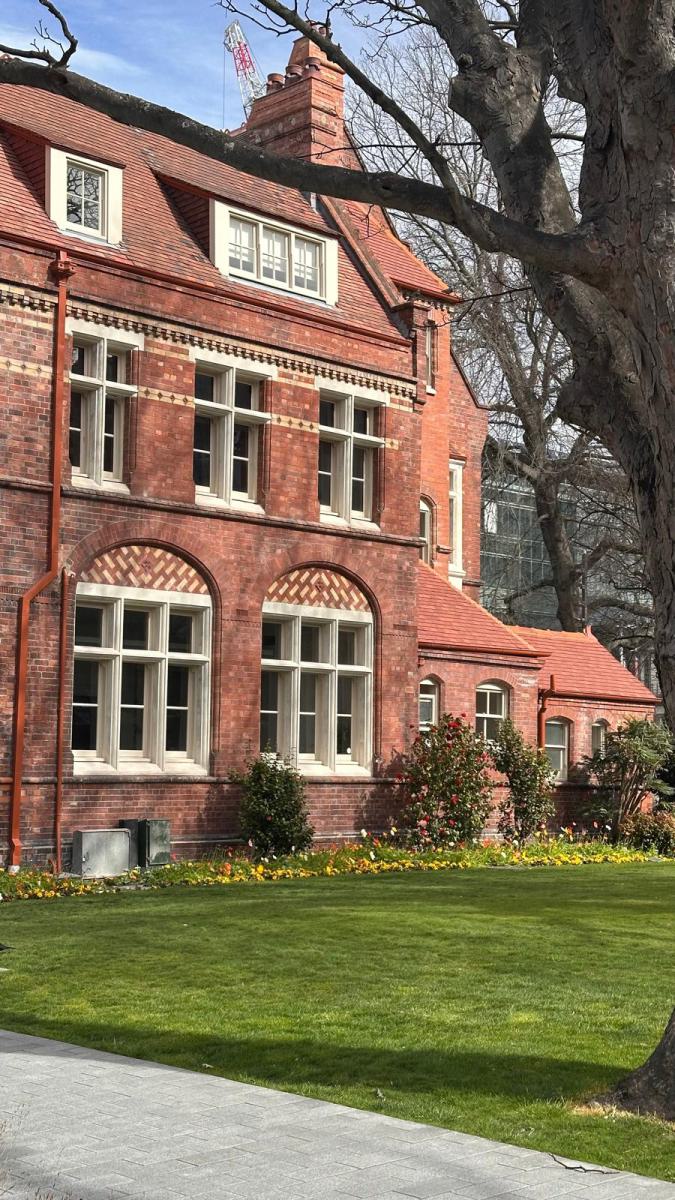
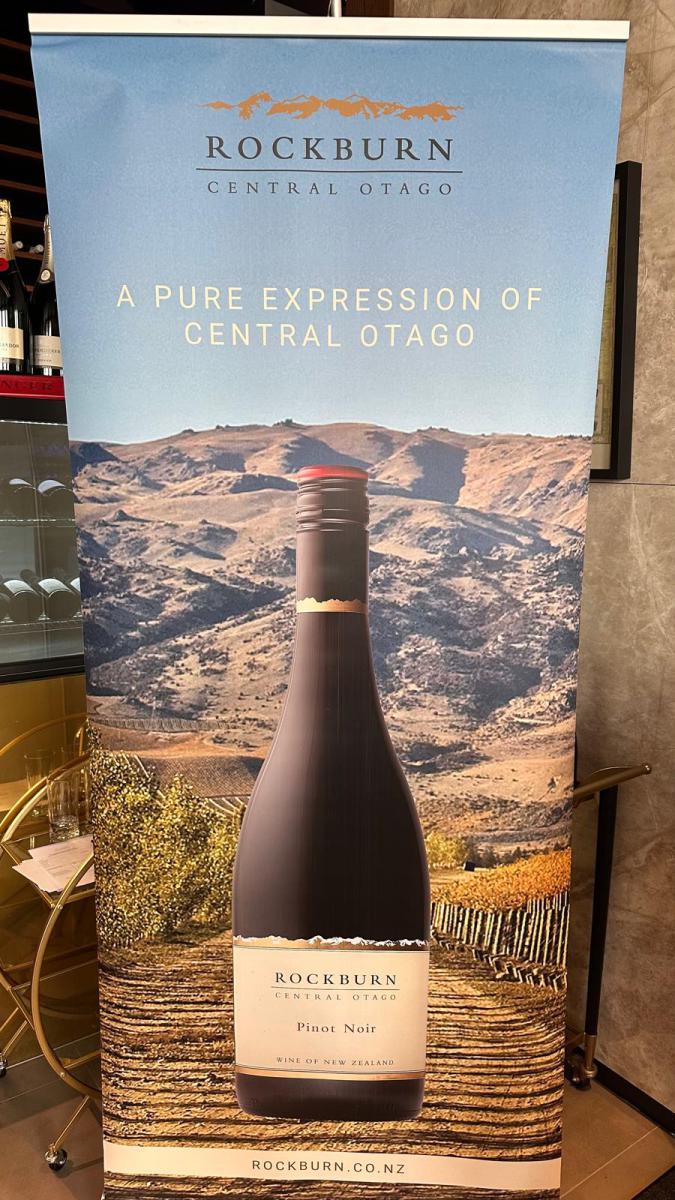
So, but now spring is truly on its way—sunshine, nearly 20 degrees, a light breeze, and daffodils blooming everywhere—marvelous. Today I went to the ‘Urban Wine Walk’ wine tasting with the girls and Sebi—the cock of the walk. 9 locations, three wines each, all within four hours. What can I say—it was fun 😁—the goal was to still be able to walk between the tram tracks by afternoon. Here are a few impressions.














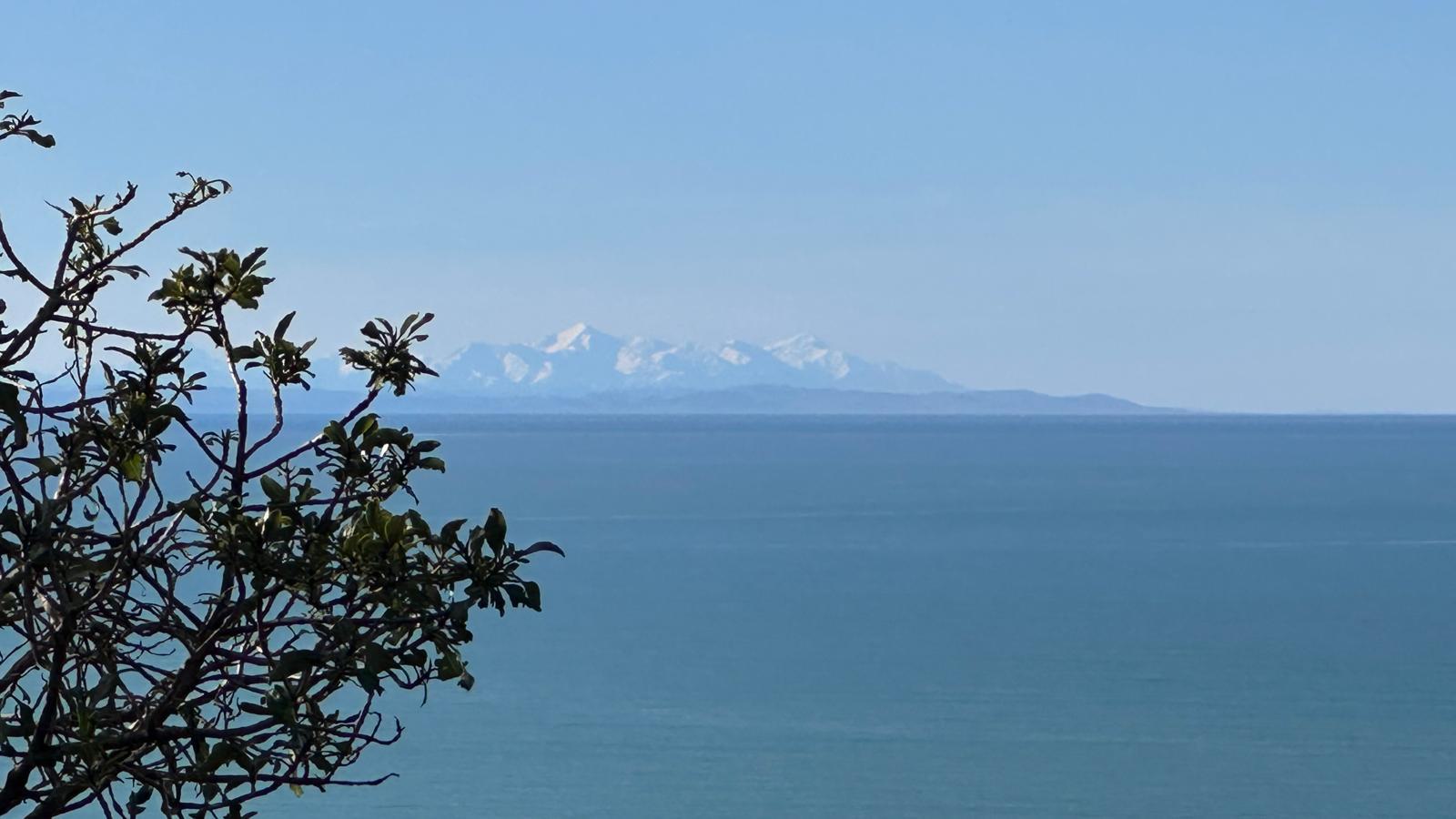
And last weekend the kids and I were out on our mountain bikes along the Summit Road up to Godley Head and then down to Sumner—also very beautiful—see pictures.

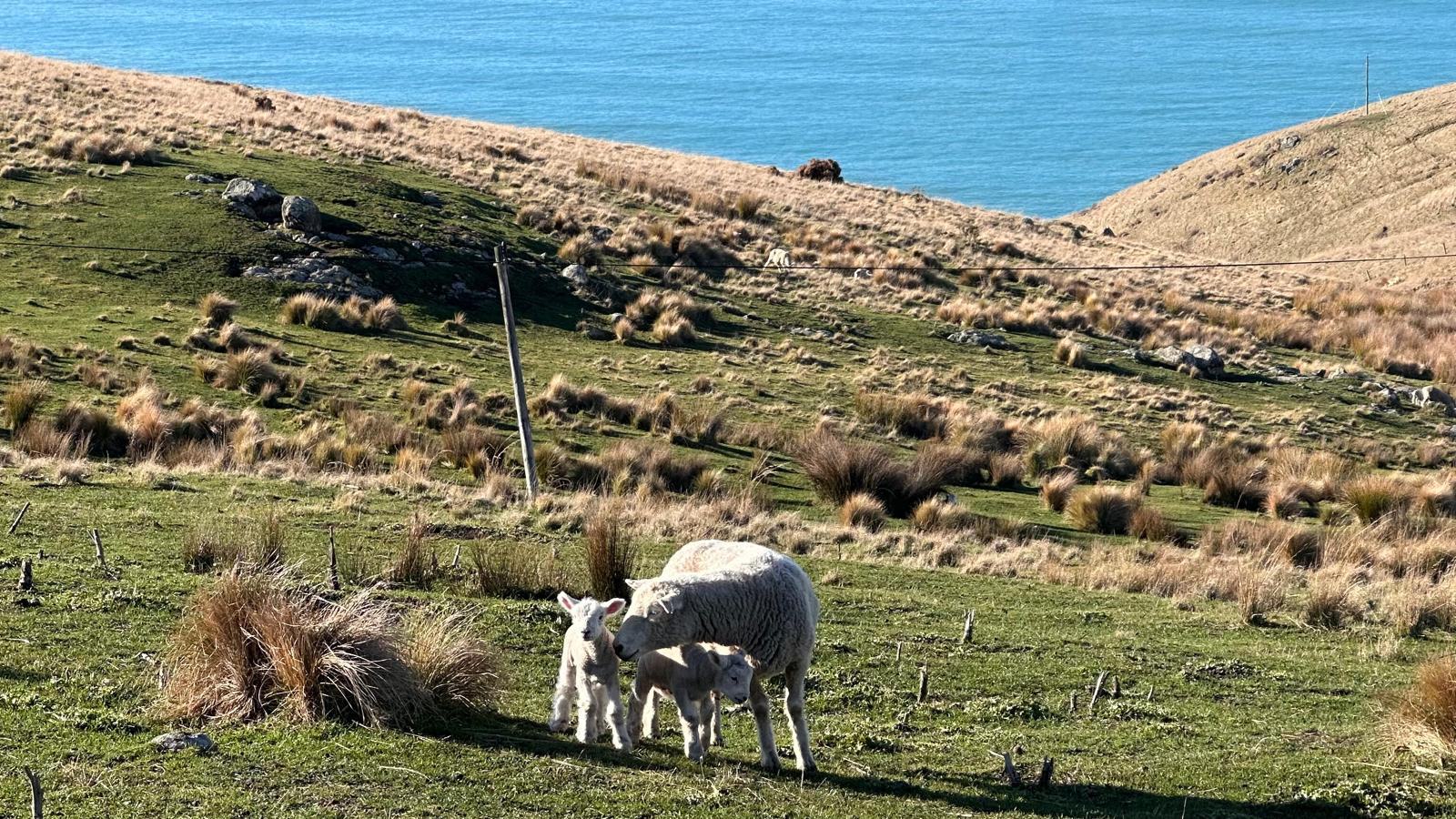
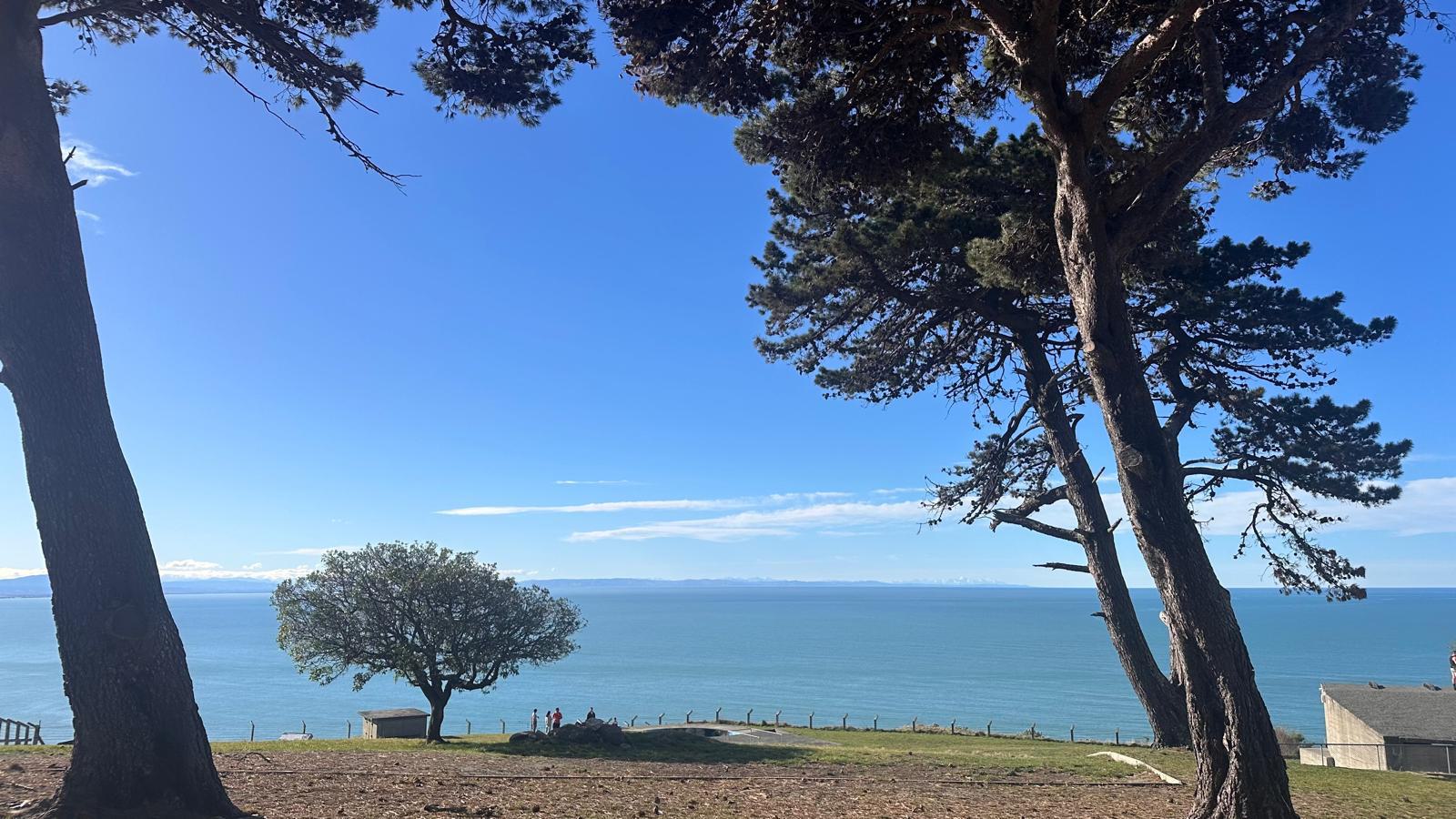
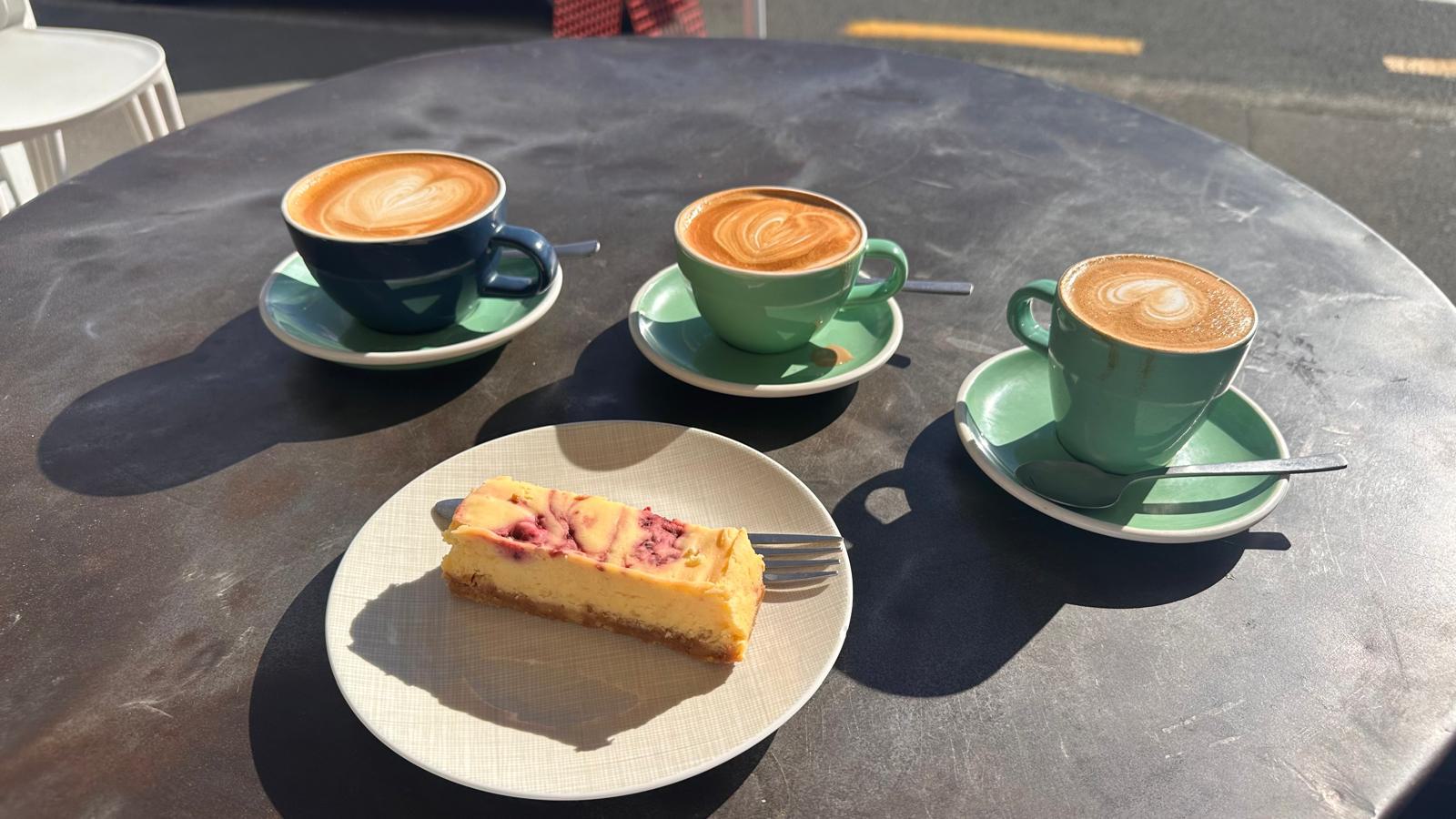


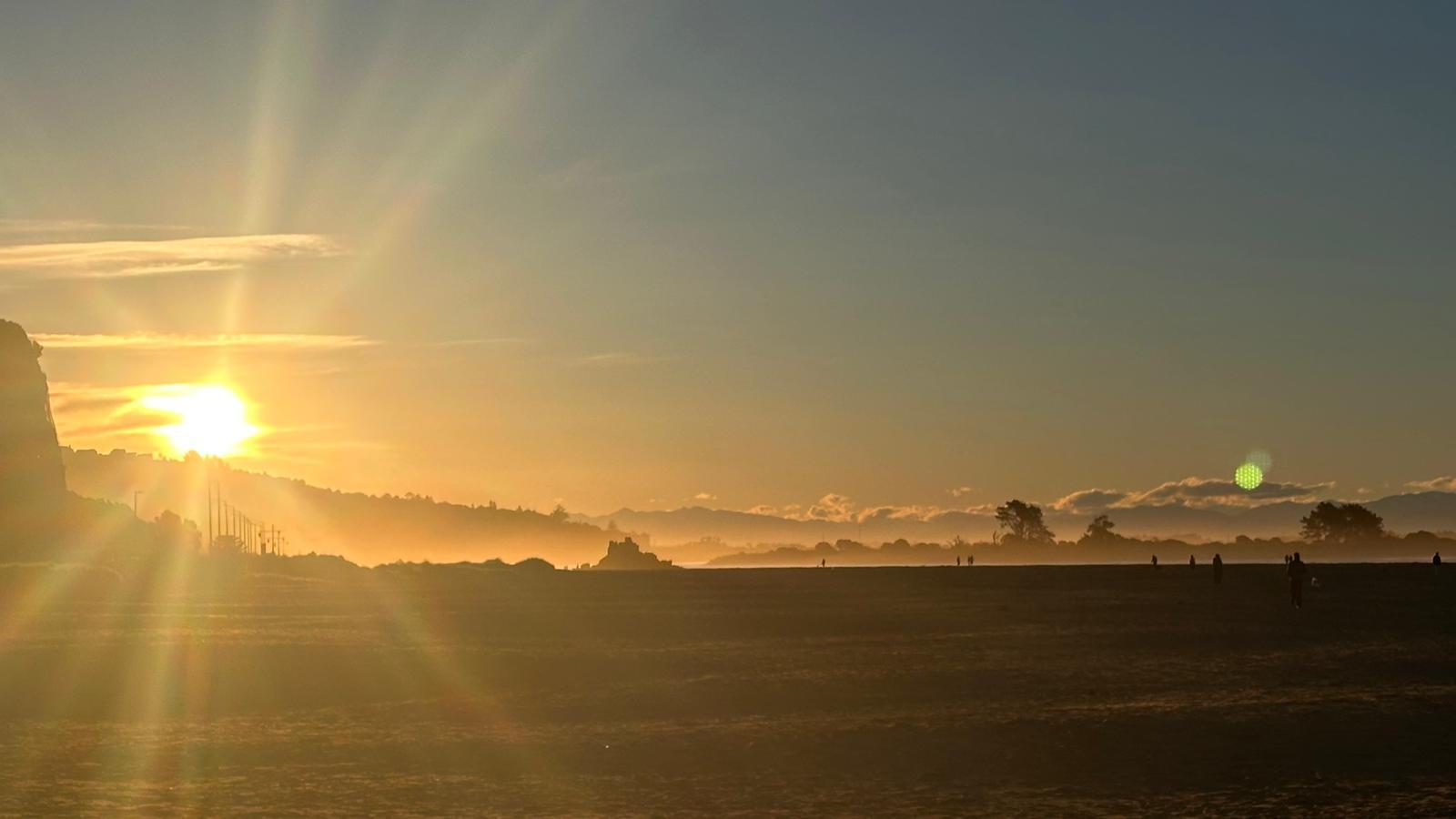
And finally, below are a few more impressions of the fauna in Christchurch’s winter.
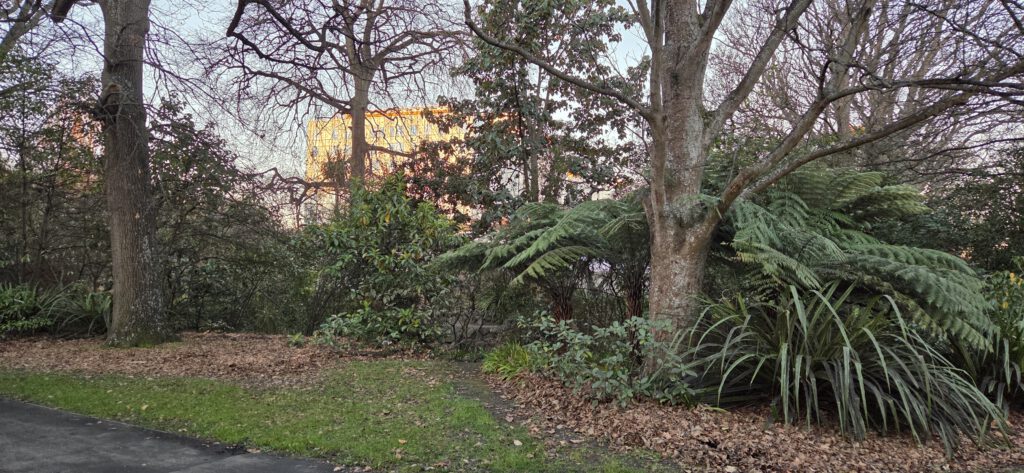

Winter as we know it from the Upper Palatinate doesn’t exist here in Christchurch. Kiwis might walk around in shorts and a t-shirt all year round, but below 10°C they say it’s cold. It almost never drops below 0°C; in rare cases, you might have to scrape a thin layer of frost off the car windshield. If you don’t have a scraper—like us in the beginning—Vroni just uses a spatula.😉.
These conditions—mild by our standards—mean that many plants are in full bloom right in the middle of winter.
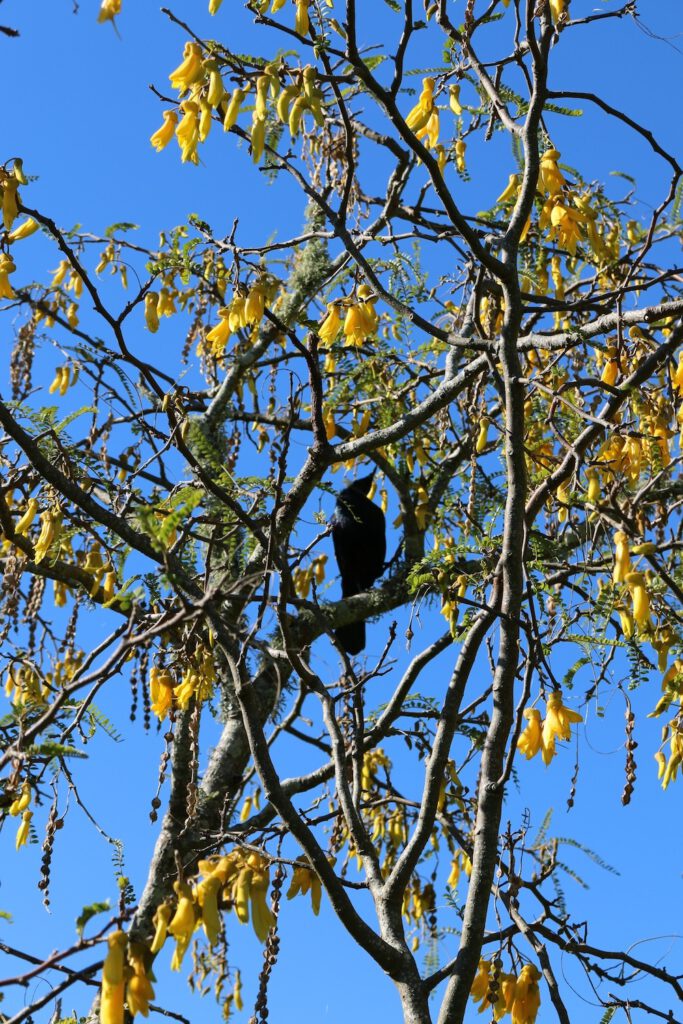
The Kōwhai (Sophora spp.) is known for its striking, bright yellow bell-shaped flowers in spring, which serve as an important food source for native honeyeaters like the Tūī.
These bright yellow bell blossoms often open shortly before the new leaves emerge. As a result, many trees stand almost completely leafless in spring (August), yet full of yellow flowers.
The shrub represents an important food source for birds. The flowering period falls precisely at the time when native New Zealand honeyeaters such as the Tūī, the Bellbird (Korimako), and the Kererū urgently need fresh nectar. At the same time, the birds play the primary role in pollination.
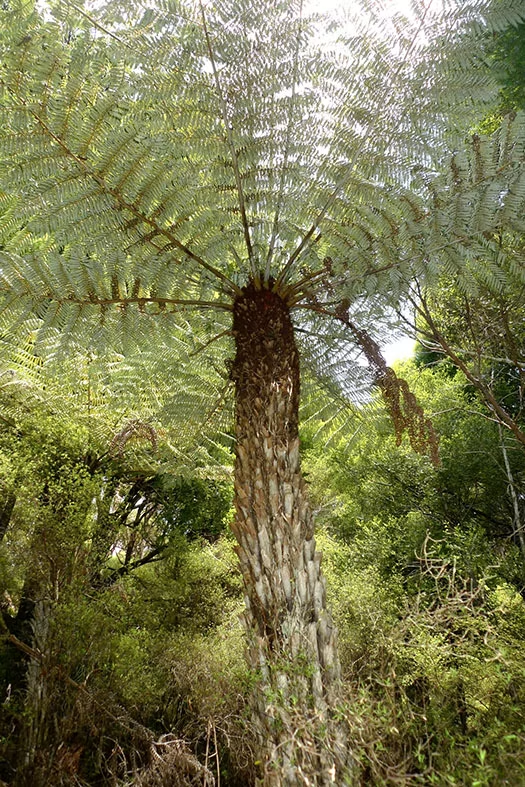
Silver fern (Cyathea dealbata / Ponga): A characteristic tree fern with a silver-shining underside on its fronds, considered an unofficial national symbol of New Zealand.
The silver fern is naturally less prevalent in the east of the South Island (such as in the Canterbury region) than on the North Island. There it grows mainly in sheltered valleys and bush areas (e.g., in the protected gullies of the Banks Peninsula, on whose northern side we live).
The trunk of tree ferns does not consist of wood with annual rings, but is a dense network of roots and the dead, woody bases of old fronds.
When old fronds fall off, they leave a characteristic scarred pattern on the bark structure of the trunk. Over the years, it can reach a trunk height of 10 to 12 meters.
Unlike deciduous trees, the fern does not lose its fronds in the New Zealand winter. During cooler winter phases, only the growth of the koru (the newly unfurling fern fronds) slows down. The characteristic silver-white underside remains visible year-round.
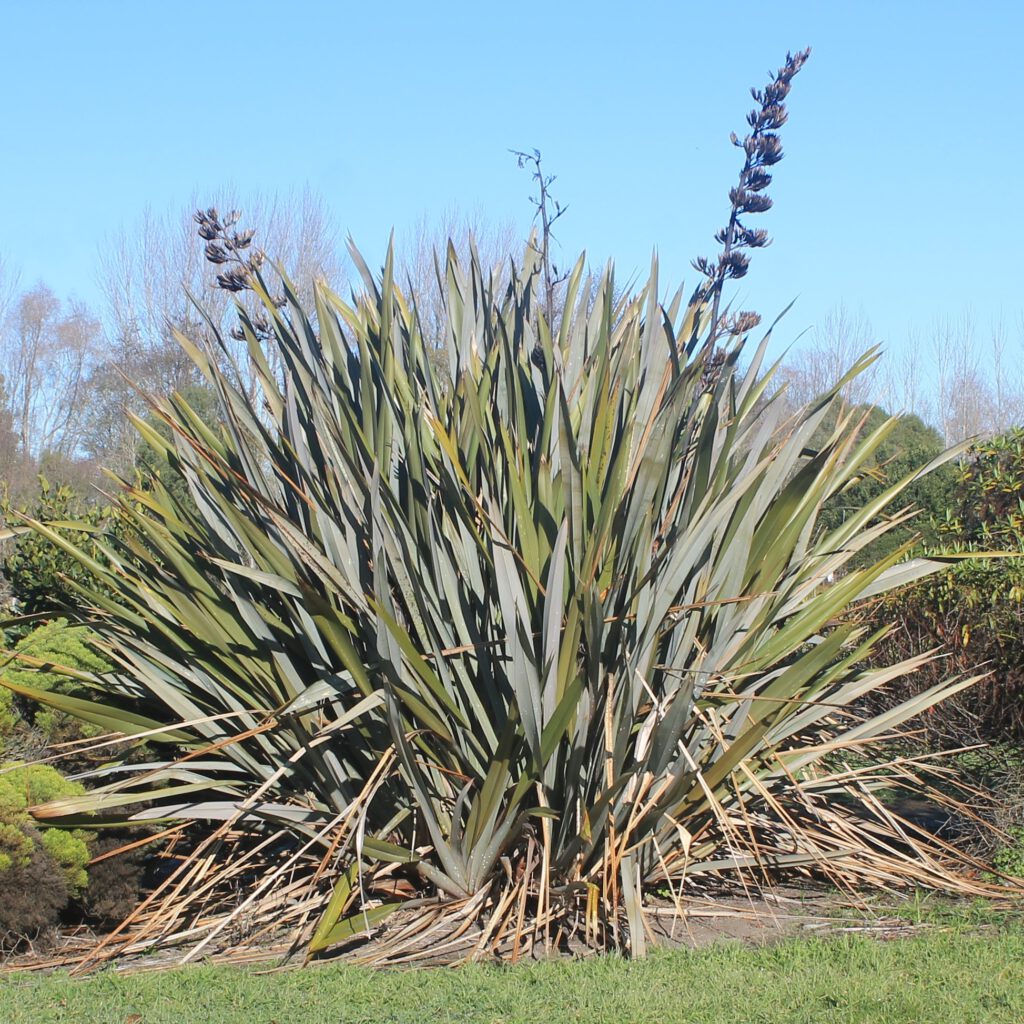
Harakeke / New Zealand flax (Phormium tenax): A robust plant with sword-shaped leaves that is traditionally used by the Māori for weaving textiles, mats, and ropes.
It blooms in the New Zealand late spring to high summer, typically in the months of November through January. The photo taken in July shows dried flower stalks from the previous summer.
As with the Kōwhai, the sugar-rich nectar of the Harakeke flowers is a major food source for native birds like the Tūī and the Bellbird (Korimako), which carry pollen from plant to plant while searching for nectar.
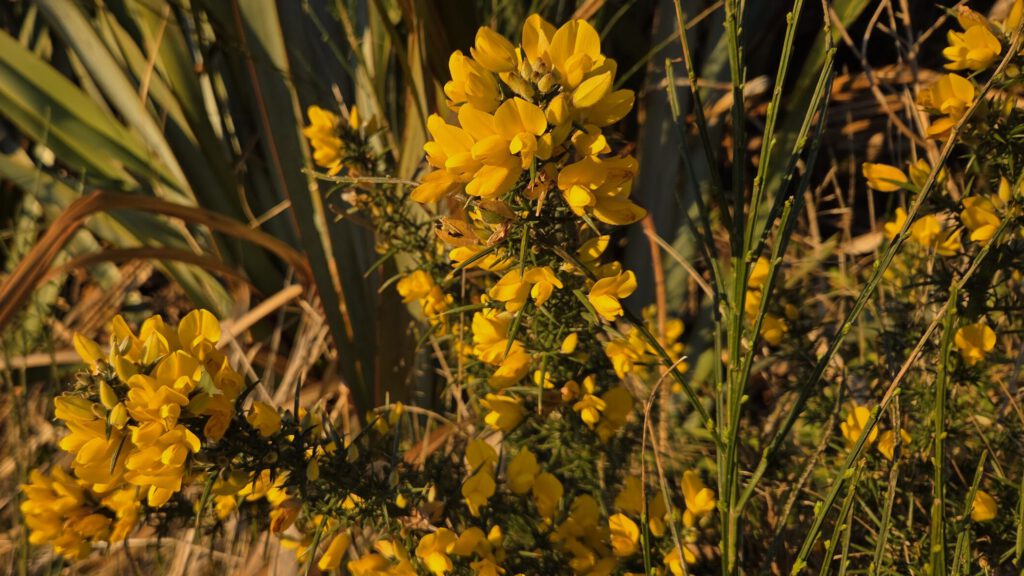
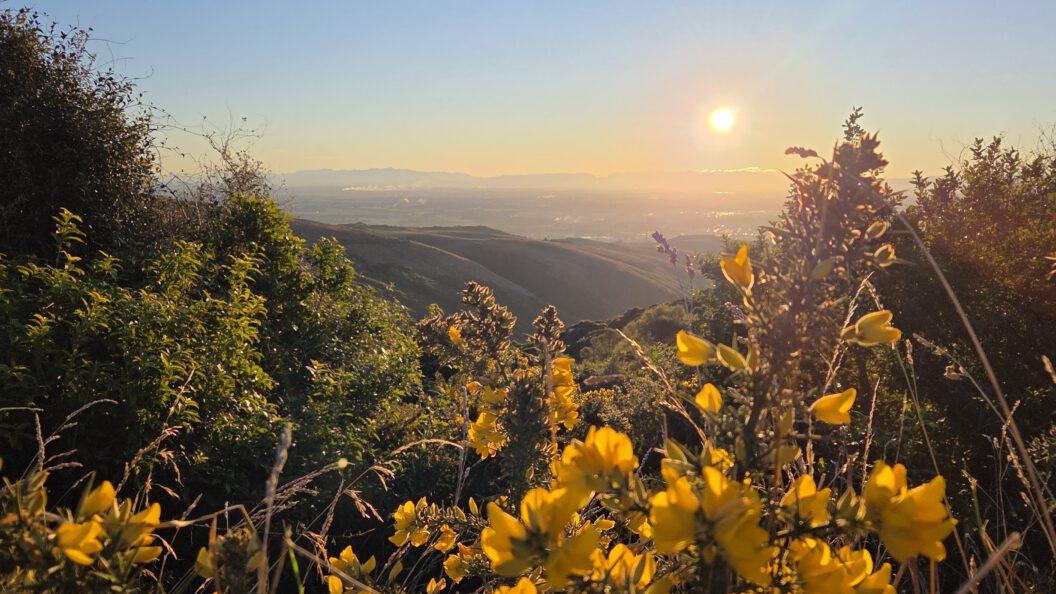
All over the slopes of the Banks Peninsula stands gorse (Ulex europaeus). Gorse has bright yellow pea-like flowers, green thorns instead of traditional leaves, and an intense, slightly sweet fragrance (reminiscent of coconut or vanilla). It was originally introduced to New Zealand from Europe in the 19th century as a hedging plant to fence in livestock pastures. Gorse is considered an extremely invasive weed in New Zealand. Due to the mild climate, it blooms and reproduces far more aggressively there than in Europe, rapidly overgrowing native ecosystems; on the other hand, it also offers native plants protection from grazing animals, allowing them to grow.
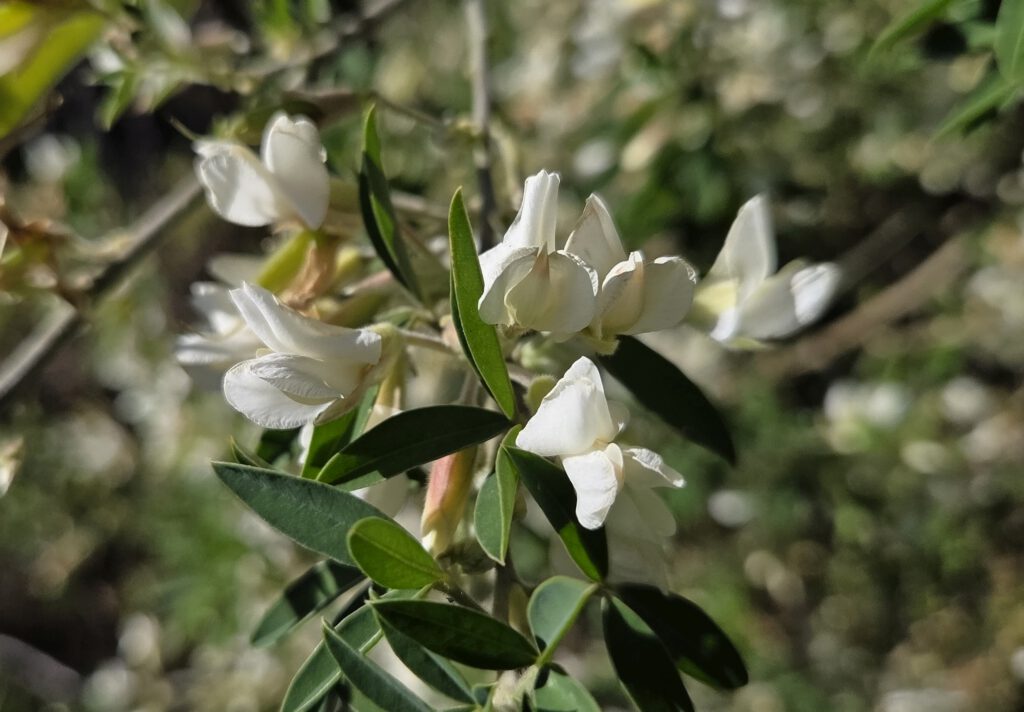
This is tree lucerne: an evergreen, fast-growing shrub or small tree with trifoliate, soft, gray-green leaves and fragrant, creamy-white pea-like flowers. It originally comes from the Canary Islands (particularly La Palma). As a legume, the plant fixes nitrogen in the soil. Furthermore, its blossoms are an important food source in early spring for bees and the native New Zealand wood pigeon, the Kererū. In some locations (such as roadsides or hillsides) it is considered naturalized, but unlike gorse, it is often deliberately planted as a windbreak or fodder crop.
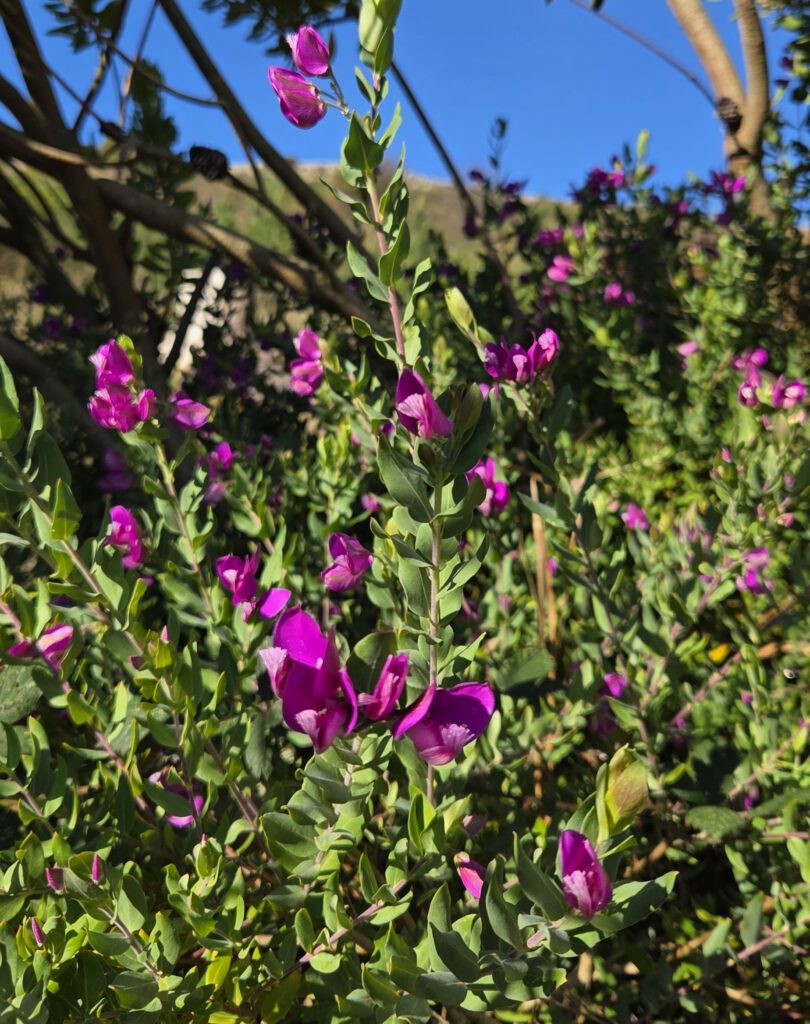
This is a myrtle-leaf milkwort (Polygala myrtifolia), also known in English as the sweet pea bush. It originally comes from South Africa.
The myrtle-leaf milkwort is an evergreen shrub with oval, myrtle-like, gray-green leaves. The striking, magenta to purple flowers resemble pea blossoms at first glance, but feature a characteristic, fringed tuft (keel) at the front.
Popular in New Zealand gardens for its long blooming period, it is considered an introduced exotic species in coastal areas, along roadsides, and on hillsides (e.g., the Port Hills). It tends to spread easily via seeds.
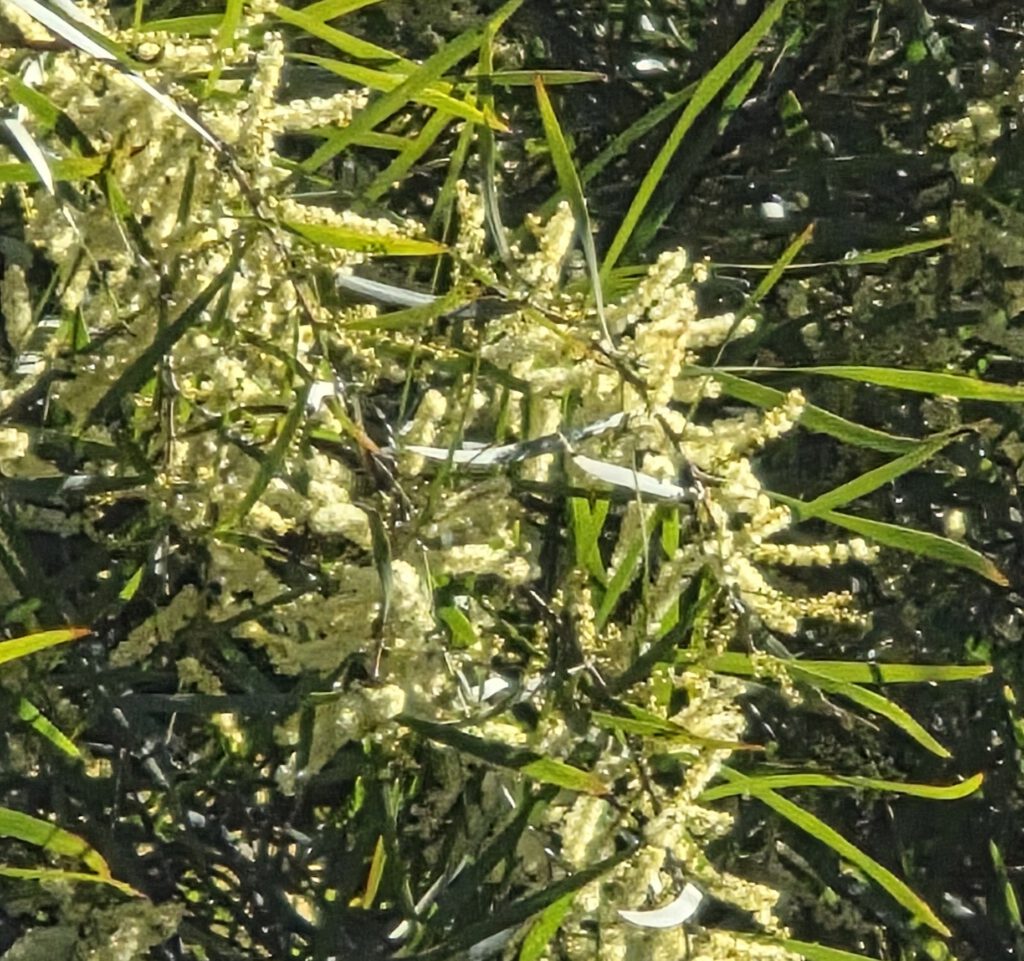
Acacias are blooming in the gardens (this is likely the Sydney Golden Wattle).
It originally comes from southeastern Australia, featuring narrow, elongated leaves and elongated, cylindrical flower spikes with creamy-yellow to bright yellow, bushy flower clusters.
In New Zealand, this acacia species is considered an introduced tree/shrub and, in many places, an invasive exotic, as it spreads rapidly along coasts, roadsides, and on poor soils, crowding out native plants.
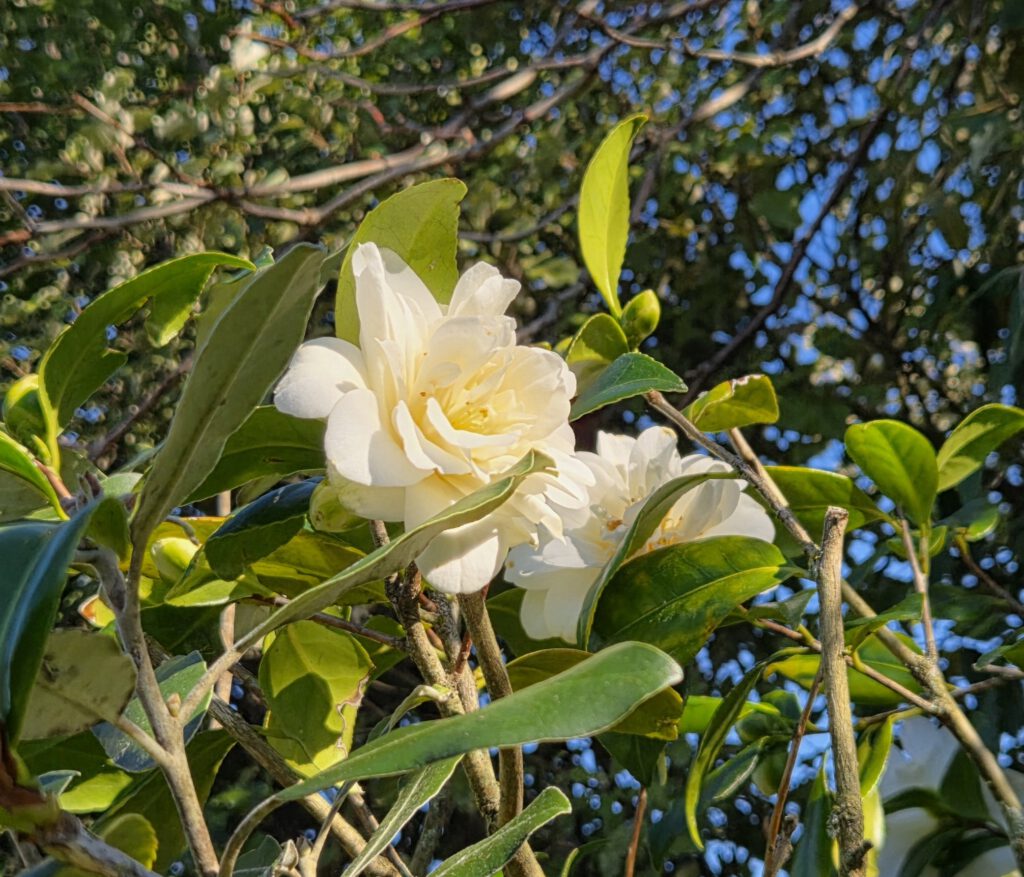
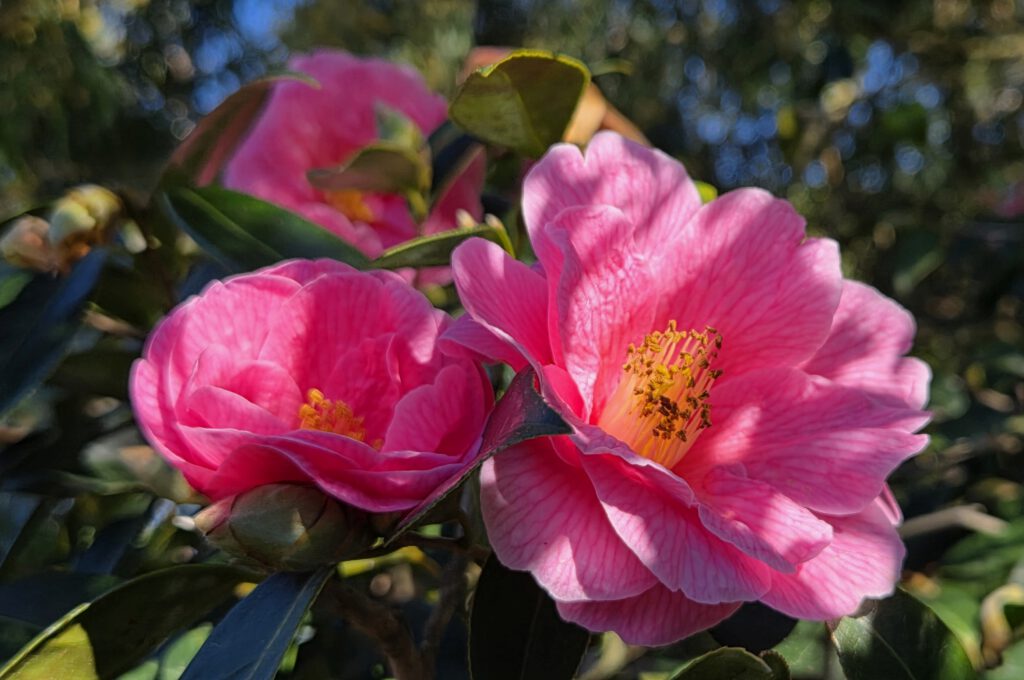
These are camellias (Camellia), which originally come from East Asia (China, Japan).
The camellia is an evergreen shrub with thick, glossy dark green, slightly serrated leaves. The double to semi-double flowers range from pure yellow/creamy white to vibrant pink. Camellias are extremely popular ornamental plants in New Zealand gardens, parks, and avenues. The mild climate provides ideal growing conditions, allowing them to bloom profusely in the New Zealand late winter and spring (July to September).
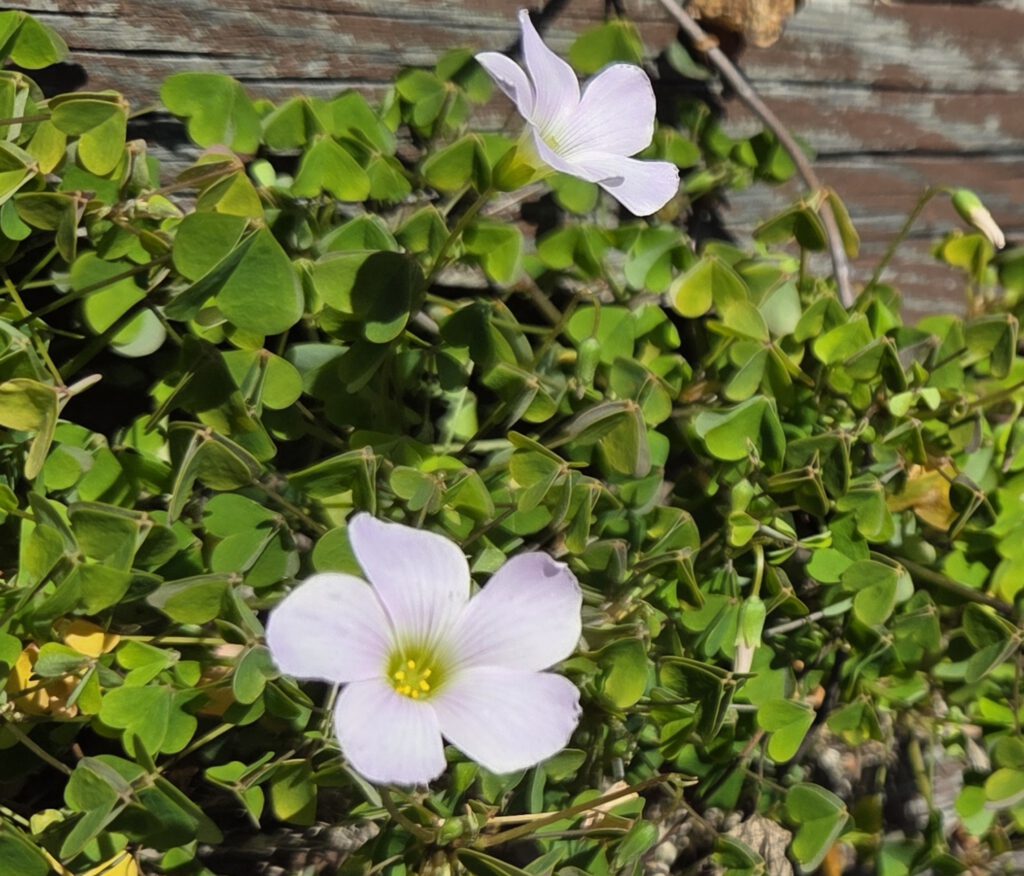
This is a wood sorrel (Oxalis), likely the fishtail oxalis originating from South Africa.
It has heart-shaped, trifoliate leaves (clover-like) on upright, slightly reddish stems. The flowers are pale pink to lilac with a yellow center. It forms underground tubers as well as small bulbils along the stems, allowing it to spread extremely efficiently. The leaves fold up in darkness or rain. In New Zealand, it is widespread and often considered a stubborn weed in gardens, lawns, and forest edges, as it forms dense mats and displaces native plants.
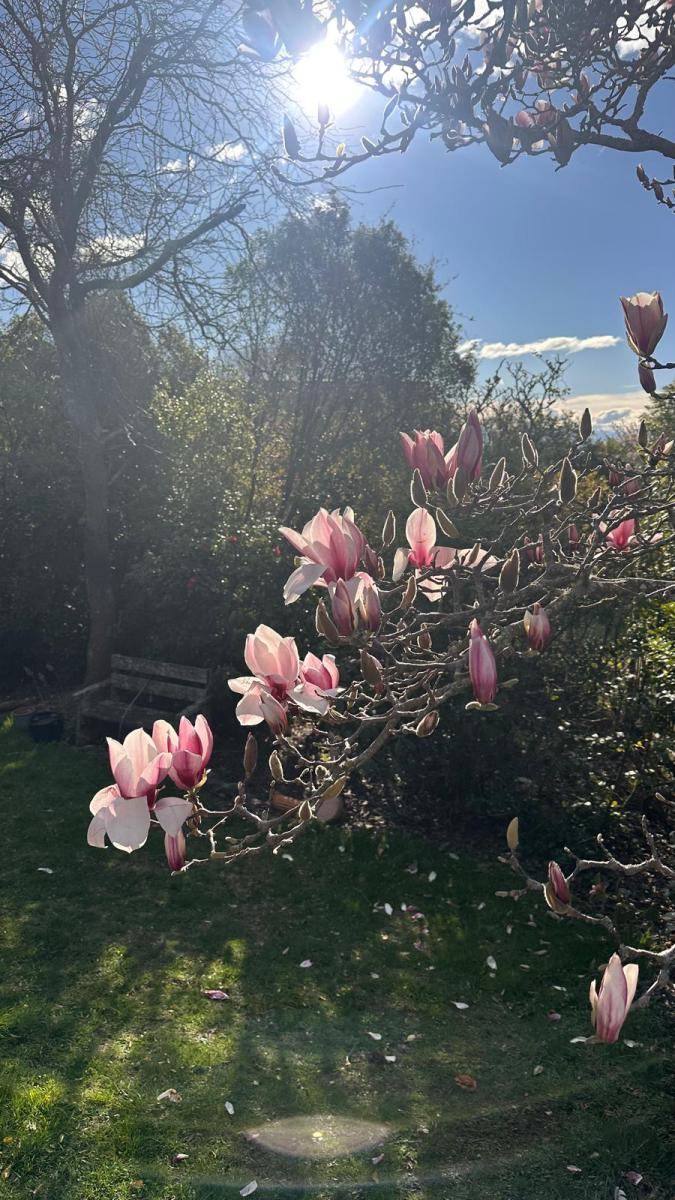
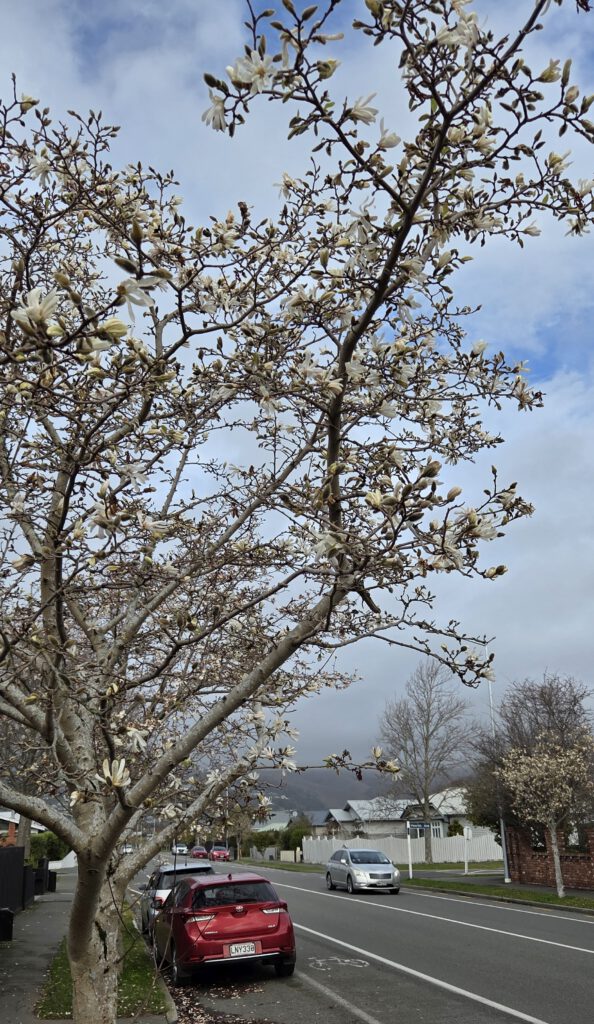
This is a star magnolia (Magnolia stellata) originating from Japan, just like the ones you find in German gardens.
The magnolia is a deciduous, slow-growing small tree or large shrub that features star-shaped, radially arranged blossoms with many narrow, white petals. They open in early spring (pictured here against wintry snow/rain clouds) on branches that are still completely leafless. It is very popular as a street tree (the photo shows an avenue of magnolias on Strickland Street) in Christchurch’s residential areas, as it blooms reliably in the middle of the New Zealand late winter and heralds the arrival of spring.
I admit that I’m torn. On one hand, the many imported plants look really lovely, but on the other hand, some of them are aggressively displacing the native vegetation.
Honesty Declaration: I sourced the information about the plants from the internet.
